
⏰ 2/5
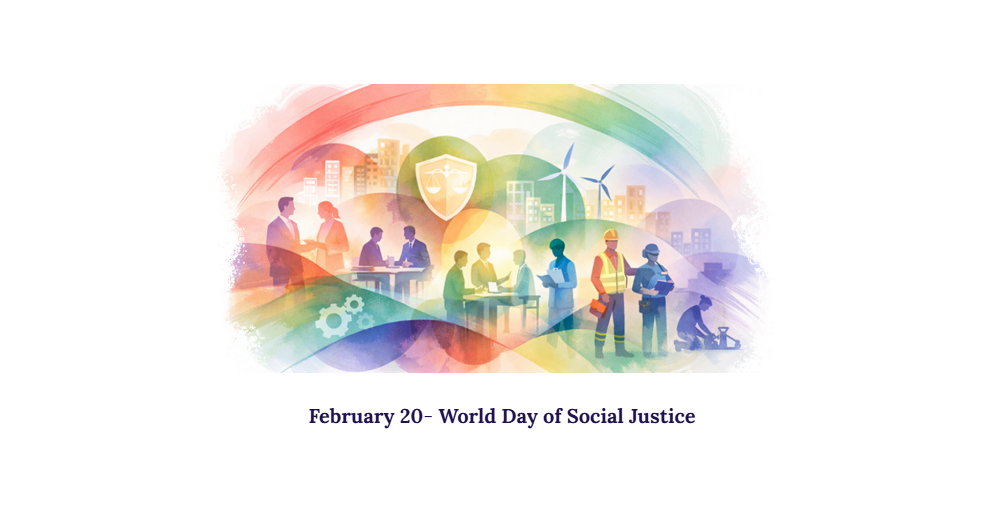
The World Day of Social Justice was proclaimed by the United Nations General Assembly in 2007 and first observed in 2009. Its purpose is to highlight a simple yet fundamental truth: “Sustainable peace is impossible without social justice.” Social justice means ensuring equal access to education, decent work, healthcare, and human dignity for all, not only for a privileged few.
Foundational human rights documents affirm this principle. The Universal Declaration of Human Rights (UDHR) recognizes the inherent dignity of every human being and calls on governments to create conditions that allow each person to live with dignity. Yet, the same document contains a critical warning. The third paragraph of the Preamble to the UDHR states:
“Whereas it is essential, if man is not to be compelled to have recourse, as a last resort, to rebellion against tyranny and oppression, that human rights should be protected by the rule of law.”
Social justice, therefore, is not merely a moral aspiration; it is a prerequisite for stability. Widespread poverty, structural discrimination, social exclusion, and economic inequality are more than just welfare issues, they are catalysts for instability, violence, and social distrust.
In this context, civil society institutions, universities, and faith communities play a crucial role. By strengthening solidarity, supporting vulnerable groups, and promoting a culture of responsibility, they help translate the concept of justice into a lived reality. Justice cannot be achieved by legislation alone; it requires active social participation.
The World Day of Social Justice reminds us that human dignity is indivisible. A society that neglects any segment of its people ultimately undermines its own security and future. To defend justice is to defend humanity and to secure a lasting peace.
Special Focus for 2026: Social Protection and Decent Work
The 2026 theme, “Social Protection and Decent Work for All,” shifts our focus toward practical policies that build resilient societies. Social justice is not an abstract concept; it is realized through concrete actions such as protecting labor rights, ensuring inclusive public services, and establishing robust social safety nets. These systems are essential for helping individuals and families, especially children, navigate the shocks of conflict, rising living costs, and the ongoing climate crisis with their dignity intact.
Furthermore, we must recognize that decent work is the cornerstone of an inclusive society. It is more than just a job; it is a human rights-based approach to the economy that combines fair employment with social dialogue and health equity. By extending these protections to everyone, including displaced scholars and marginalized communities, we strengthen social cohesion and foster a future where prosperity is shared, not hoarded.
The World Day of Social Justice reminds us that human dignity is indivisible. A society that neglects any segment of its people ultimately undermines its own security and future. To defend justice is to defend humanity and to secure a lasting peace.