
The climate crisis is, above all, a crisis of children’s rights, health, and futures.
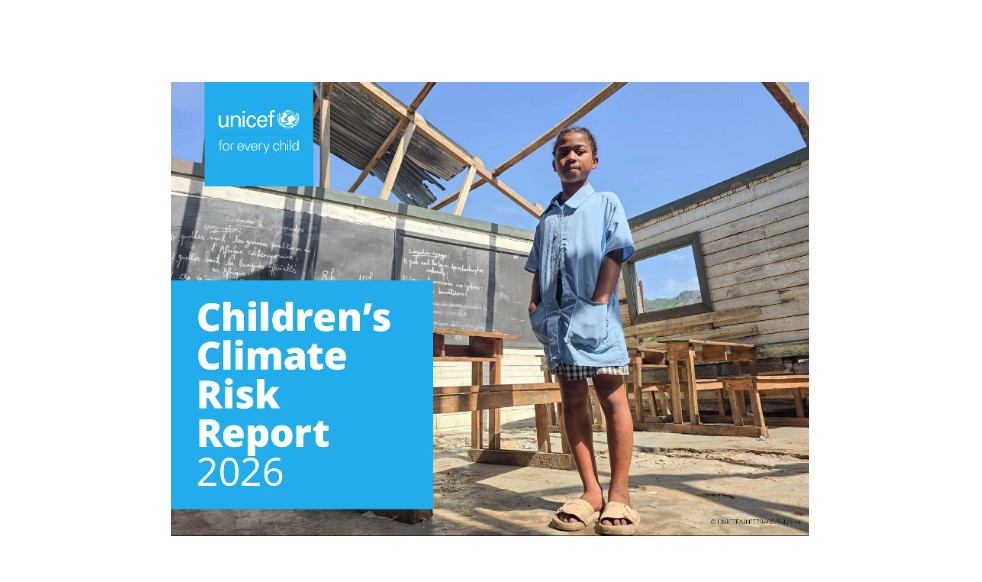
In its latest strategic document, titled “Children’s Climate Risk Report 2026,” the UNICEF Innocenti Research Centre provides the most comprehensive and detailed global mapping to date of the climate risks facing children. Grounded in a commitment to equity and climate justice, this 106-page report illustrates how children across the globe—particularly in developing countries and Small Island Developing States—bear the heaviest burden of environmental crises.
Key Themes and Highlights of the Report:
- The Intersection of Climate Hazards and Social Vulnerabilities: The report demonstrates through unprecedented analysis how children’s simultaneous exposure to multiple hazards (such as heatwaves, droughts, and floods)—combined with gaps in essential social services—severely threatens their fundamental rights.
- Launch of the Global Child Hazard Database: By introducing the Global Child Hazard Database, UNICEF enables fine-scale, regional geographic analysis, allowing decision-makers to pinpoint critical risk hotspots more accurately.
- Comprehensive Assessment via the Children’s Climate Risk Framework: This innovative framework pairs climate hazard exposure with children’s access to six vital sectors: Health, Water, Sanitation, and Hygiene (WASH), Nutrition, Education, Child Protection, and Social Protection.
Selected Policy Recommendations:
Moving beyond problem analysis, the report outlines concrete, cross-sectoral policy recommendations for governments and international organizations:
- Build Climate-Resilient Essential Services for Children: Strengthen the climate resilience of water, health, nutrition, and education systems to ensure uninterrupted service delivery during environmental shocks.
- Invest in Climate Education and Green Skills: Integrate environmental, climate change, and resilience education into official school curricula to empower children and youth as agents of change.
- Incorporate Children’s Rights into Climate Finance: Increase the share of national and international climate finance allocated to projects that directly reduce children’s vulnerability and address their specific needs.
- Include Children and Youth in Decision-Making: Establish formal platforms to ensure the voices of children and youth are heard in environmental policy-making and national/international climate processes.
Underlining the inseparable link between Human Rights, Climate Justice, and Child Protection, the Roya Institute encourages researchers, environmental advocates, educators, and policy-makers to study this critical report.
Access the Full Report: Interested readers can access and download the full 106-page report in English via the United Nations online library: