
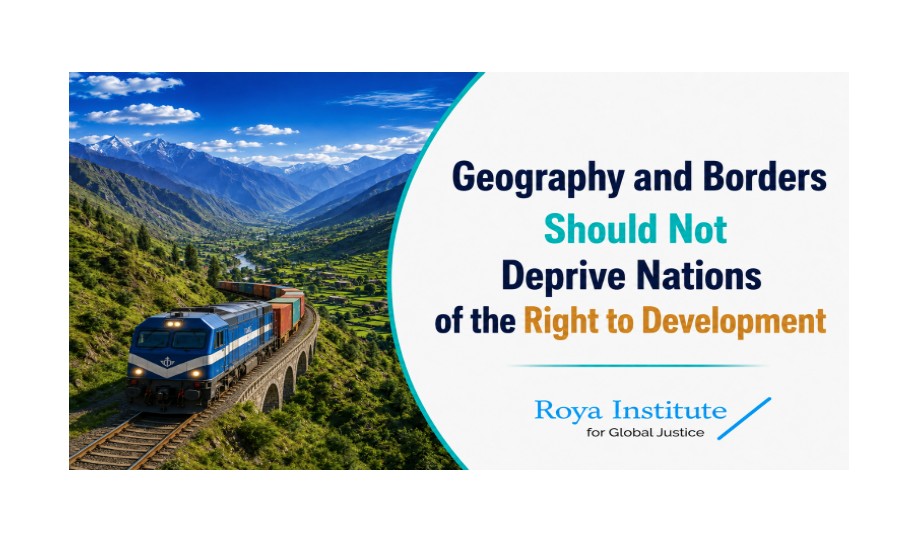
For hundreds of millions of people, geography is more than a location on a map—it shapes access to opportunity, trade, education, healthcare, and ultimately, human dignity.
Today, 32 Landlocked Developing Countries (LLDCs) are home to more than 600 million people. Without direct access to the sea, these countries depend on neighboring states for access to global markets. Higher transportation costs, border delays, inadequate infrastructure, and vulnerability to political and economic instability place them at a persistent disadvantage in pursuing sustainable development.
Observed on August 6, the International Day of Awareness of the Special Development Needs and Challenges of Landlocked Developing Countries draws global attention to these structural inequalities.
These are not merely economic obstacles. They have profound human rights consequences.
When transport costs consume scarce public resources, fewer schools and hospitals are built. When exports become less competitive, jobs disappear. When essential medicines or humanitarian assistance are delayed at borders, the most vulnerable communities bear the greatest burden. Geography, therefore, can become a multiplier of inequality.
For Afghanistan, these challenges are especially severe. As a landlocked country facing decades of conflict, humanitarian crises, and economic disruption, reliable transit routes are essential not only for trade but also for food security, healthcare, education, and the realization of fundamental human rights. Ensuring predictable, affordable, and uninterrupted regional connectivity is indispensable to improving the lives of millions of Afghans.
Some countries face an even greater geographic disadvantage. They are known as doubly landlocked countries—states surrounded entirely by other landlocked countries, requiring passage through at least two neighboring states before reaching an international seaport. Liechtenstein and Uzbekistan are the world’s only two doubly landlocked countries. Their situation illustrates how geography can create multiple layers of dependency and vulnerability, making regional cooperation even more essential.
The United Nations established this International Day to raise awareness of these unique development challenges. It is also a reminder that sustainable development should not depend on geographical fortune. International cooperation, investment in transport corridors, digital connectivity, climate-resilient infrastructure, and fair transit arrangements are essential to ensuring that no nation is left behind simply because of where it is located.
At Roya Institute for Global Justice, we believe that equal dignity requires equal opportunity. Geography may shape challenges, but it should never determine the rights, aspirations, or future of any people.
Human dignity should never be constrained by geography.