
2 min read
Wars and armed conflicts are often initiated by political leaders through hateful rhetoric and by military actors through the use of weapons — frequently without any clear or realistic understanding of how such violence will end. Arms dealers and manufacturers, the merchants of death and destruction, often profit from these conflicts. Yet children, despite having no role in creating these cycles of violence, are among their first and most vulnerable victims.
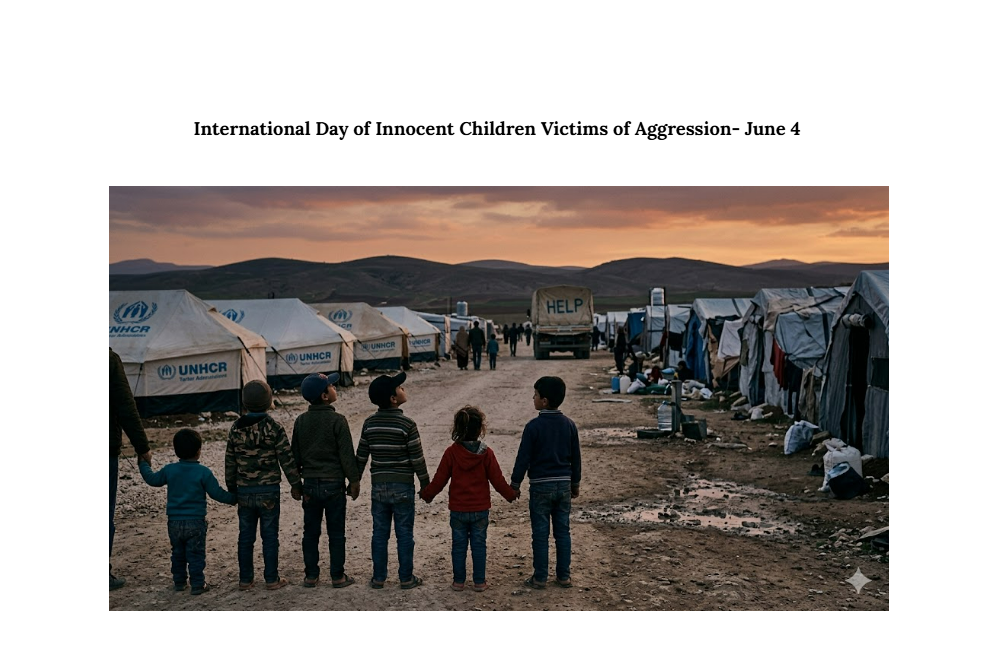
On the International Day of Innocent Children Victims of Aggression, the international community is reminded of one of the most painful realities of war, violence, and armed conflict: children are often among the first and most vulnerable victims.
Established by the United Nations General Assembly in 1982, this observance was originally created in response to the suffering of Palestinian and Lebanese children affected by armed violence. Over time, it has become a global day of awareness for all children whose lives are damaged by war, occupation, forced displacement, political violence, terrorism, and humanitarian crises.
Across many regions of the world, children continue to suffer from bombings, hunger, displacement, loss of family members, destruction of schools and hospitals, human trafficking, and psychological trauma caused by violence and instability.
According to UNICEF, millions of children today live in conflict zones or humanitarian emergencies. Many are deprived of education, healthcare, clean water, shelter, and basic safety. Armed conflicts also expose children to long-term emotional and psychological harm that may continue throughout their lives.
Children are not responsible for wars, political rivalries, ideological conflicts, or the failures of adults. Yet they often carry the heaviest burdens of violence.
Protecting children therefore requires more than humanitarian aid alone. It also requires peacebuilding, international cooperation, respect for international law, protection of civilians, and long-term investment in education, healthcare, and social stability.
What can societies and ordinary citizens do?
- Support humanitarian organizations assisting children in crisis zones.
- Raise awareness about the impact of war and violence on children.
- Encourage policies that protect civilians and children during conflicts.
- Support education, mental health services, and trauma recovery programs for affected children.
- Reject hatred, dehumanization, racism, and incitement to violence.
- Promote cultures of dialogue, coexistence, and peace.
Every child deserves safety, dignity, education, love, and hope for the future.
The protection of children is not only a humanitarian responsibility. It is a moral responsibility shared by all humanity.