
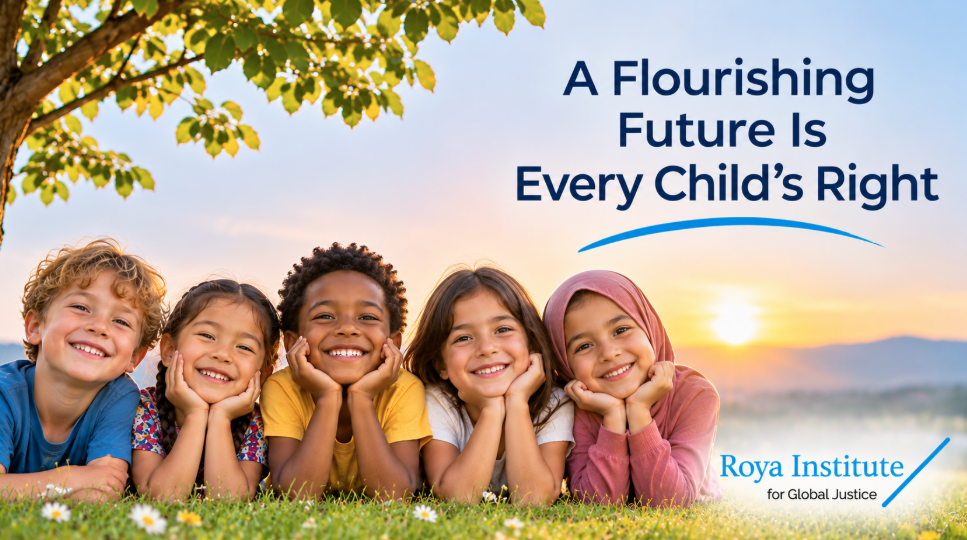
Protecting Children Today, Securing Their Future Tomorrow
Every child deserves to grow up in safety, dignity, and hope. Yet millions of children face poverty, armed conflict, displacement, environmental threats, and uncertainty about their future.
World Children’s Day, observed on November 20, commemorates the adoption of the Declaration of the Rights of the Child in 1959 and the Convention on the Rights of the Child in 1989.
According to UNICEF’s State of the World’s Children 2025, approximately 412 million children live in extreme monetary poverty. In 2024, about 19 percent of the world’s children lived in areas affected by armed conflict.
These realities remind us that children’s rights require urgent protection. But they also raise another question: What kind of world are we preparing for children to inherit?
Security Today and Security Tomorrow
Protecting children’s security today means safeguarding them from violence, hunger, exploitation, discrimination, and neglect.
Protecting the security of their future means preserving the environmental, social, economic, and political conditions necessary for them to live with dignity as they grow older.
A child may be safe today yet face an uncertain future because of climate change, environmental degradation, recurring conflict, or decisions that undermine long-term opportunities.
These are interconnected but distinct responsibilities.
When Children Fear the Future
An increasingly important concern is climate anxiety, or eco-anxiety: fear and distress associated with environmental threats and uncertainty about the future.
As UNICEF explains, such feelings can be understandable responses to genuine environmental risks. Children need emotional support, but they also need meaningful action to address the dangers causing their anxiety.
Their concerns should not be dismissed simply because they are young.
Children’s Rights Extend into the Future
In its General Comment No. 26 (2023), the United Nations Committee on the Rights of the Child recognizes the importance of intergenerational equity and states’ responsibility for foreseeable environmental threats resulting from present decisions.
This principle offers an important reminder: decisions made today can affect children’s rights for decades.
Governments, businesses, international institutions, educators, and civil society organizations must therefore consider both the immediate and long-term consequences of their actions.
Children themselves should also have meaningful opportunities to participate in decisions affecting their lives and future.
On World Children’s Day, the Roya Institute for Global Justice calls for stronger protection of children’s rights, greater accountability for decisions affecting future generations, and meaningful participation by children in shaping the world they will inherit.
Protecting children today is essential. Ensuring that they inherit a world in which they can continue to live with dignity, security, and hope is equally important./